

 Unimak Technologies
 11 April 2026
 Bottle Identification System
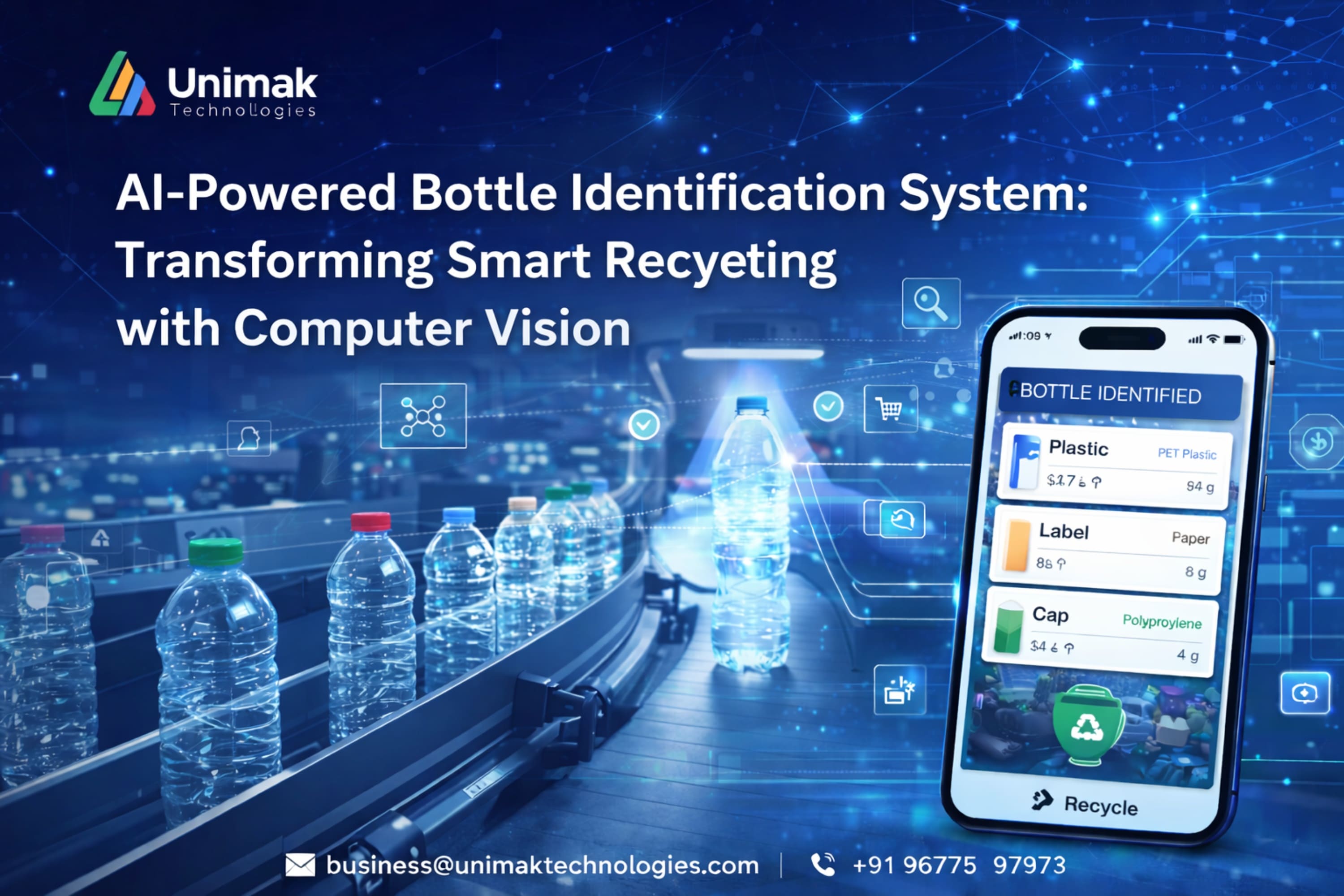
AI-Powered Bottle Identification System - Transforming Smart Recycling with Computer Vision
As environmental concerns continue to rise, the need for efficient waste management and recycling systems has become more critical than ever. Traditional recycling processes often rely on manual sorting or basic automation, which can be slow, error-prone, and inefficient. To address these challenges, advanced technologies like artificial intelligence and computer vision are revolutionizing how recycling systems operate. An AI-Powered Bottle Identification System is transforming the recycling industry by enabling accurate, real-time identification and sorting of bottles, leading to smarter and more sustainable waste management.
The Challenges in Traditional Recycling Systems
Recycling facilities often deal with a large volume of mixed waste, making it difficult to separate materials efficiently. Manual sorting requires significant labor and time, while traditional machines may struggle to identify different types of bottles accurately.
Common challenges include:
- Incorrect sorting of plastic, glass, and metal bottles
- High operational costs due to manual labor
- Limited efficiency in processing large volumes
- Contamination of recyclable materials
These challenges reduce the effectiveness of recycling efforts and increase environmental impact.
What is an AI-Powered Bottle Identification System?
An AI-powered bottle identification system uses computer vision and machine learning algorithms to detect, classify, and sort bottles based on their material, shape, and size. The system captures images through cameras and processes them in real time to identify different types of bottles. By automating the identification process, the system improves accuracy and speed while reducing the need for manual intervention.
How the System Works
The technology behind the system involves several steps:
- Image capture: Cameras capture images of bottles on a conveyor belt or disposal unit
- Object detection: AI models identify bottles within the images
- Classification: The system categorizes bottles (plastic, glass, metal, etc.)
- Sorting mechanism: Automated systems direct bottles to the appropriate recycling bins
- Data analytics: The system records data for reporting and optimization
This process ensures efficient and accurate sorting of recyclable materials.
Key Features of the System
A robust AI-powered bottle identification system includes:
- Real-time object detection and classification
- High-accuracy computer vision models
- Automated sorting integration
- Data tracking and reporting dashboards
- Scalable architecture for different environments
- Integration with existing recycling systems
These features enable seamless operation and improved recycling efficiency.
The Role of Computer Vision in Recycling
Computer vision plays a key role in enabling machines to “see” and understand objects. By analyzing visual data, the system can distinguish between different bottle types, even in complex and cluttered environments. This technology allows for faster and more accurate decision-making, making it a game-changer for modern recycling systems.
Future of Smart Recycling
As AI technology continues to evolve, recycling systems will become even more intelligent and efficient. Future advancements may include predictive analytics, automated waste tracking, and integration with smart city infrastructure. Businesses and governments that adopt these technologies early will lead the way in sustainability and environmental responsibility.
Conclusion
The need for smarter and more efficient recycling solutions is greater than ever. An AI-Powered Bottle Identification System offers a powerful way to improve waste management by automating the identification and sorting process using computer vision. By transforming traditional recycling methods into intelligent systems, businesses and organizations can reduce waste, lower costs, and contribute to a more sustainable future.